









In today’s digital world, many people unwind by scrolling through their mobile phones at night. What feels like a harmless routine, e.g. watching videos, chatting, or browsing, often leads to delayed sleep and serious long-term health damage. Most people don’t realize how deeply night-time screen exposure disrupts the body and mind.
You will rarely hear about these risks from the mobile or IT industry. Their entire ecosystem is built around keeping users engaged for as long as possible, especially at night when people are more relaxed and likely to scroll endlessly. Late-night usage fuels their revenue through screen time, ads, and data engagement.
Companies promote features like “night mode,” “eye comfort,” or blue-light filters, and so on, but these offer only partial protection and create a false sense of safety. The core problem, that is, mental stimulation and melatonin suppression, remains. Don’t forget that your attention is their profit, which is why the responsibility of protecting your health ultimately falls on you.
Many people justify using their phones at night with seemingly valid reasons such as, “I need to unwind,” “I’m only checking a few messages,” “This is the only time I get for myself,” “My work requires it,” or “I can’t sleep without watching something.” While these reasons may feel compelling in the moment, the long-term damage far outweighs the temporary comfort. Late-night screen time silently drains the brain, disrupts hormones, and chips away at overall health in ways most people don’t notice until much later. The truth is, no relaxation, entertainment, or extra work done after 10 PM is worth sacrificing deep sleep, stable mood, sharp memory, and long-term brain and heart health. Choosing to put the phone down at night is one of the simplest and most powerful forms of self-care.
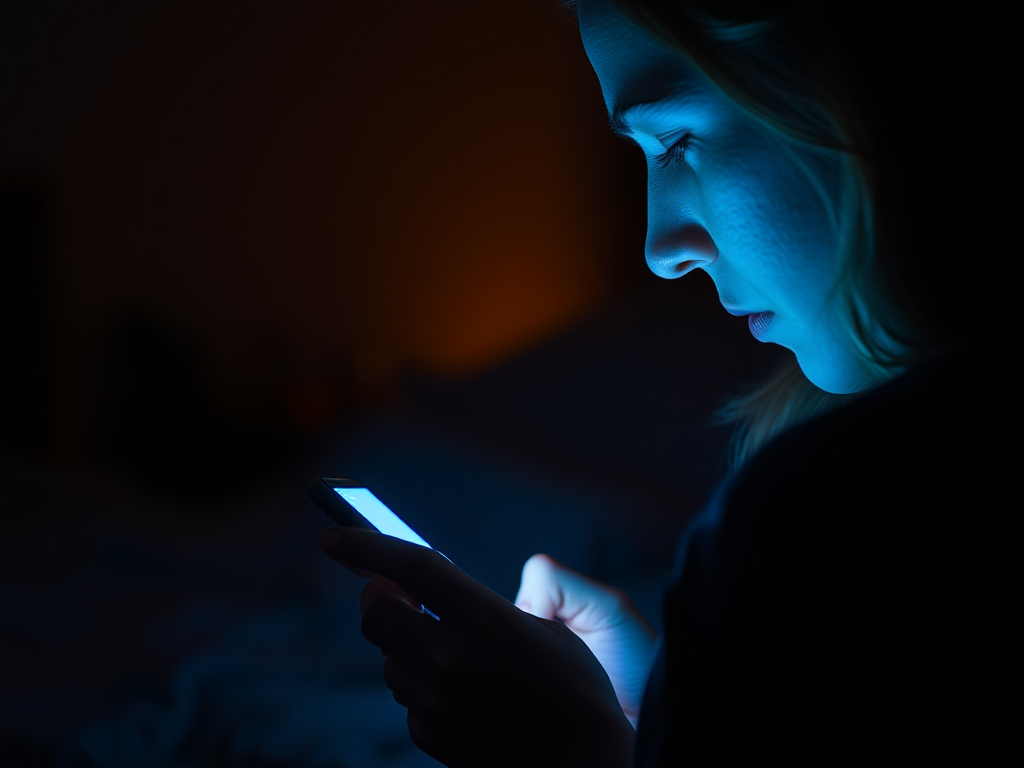
What Science Says About Screen Use at Night
Both modern science and Ayurveda strongly warn against using screens at night, especially during the hours when the body prepares for deep rest and repair.
Mobile phones emit a high-energy wavelength called blue light, which directly interferes with the brain’s sleep cycle. Normally, the body produces melatonin after sunset, but blue light suppresses it, tricking the brain into feeling awake. Studies from Harvard show that blue light exposure can delay the circadian rhythm by up to three hours, causing difficulty falling asleep, poor-quality sleep, and daytime fatigue.
Research published in Sleep Medicine Reviews links night-time screen use to:
-
Insomnia
-
Daytime sleepiness
-
Mood imbalance and anxiety
-
Poor cognition and memory
-
Reduced REM sleep
Many people think blue-light-cutting lenses or “night mode” solve the problem, but science says otherwise. Here’s why they don’t work:
-
They block only 10–20% of blue light, not enough to prevent melatonin suppression.
-
The issue isn’t just light; it’s stimulation. Videos, chats, and social media keep the brain active and raise cortisol.
-
Studies show little to no improvement in sleep quality with blue-light glasses.
-
Brightness and screen proximity still overstimulate the brain and eyes.
The only real solution is reducing screen exposure—especially before sleep.
A Serious Warning for IT Professionals
People working in the IT industry, or anyone who stays on screens late into the night, are among the most vulnerable to long-term health damage. Studies on night-shift and late-night screen users show significantly increased risks of:
-
Stroke
-
Cardiovascular strain
-
Neurological decline
The brain is not designed to remain active under artificial light past midnight. When forced to do so, it faces continuous stress, reduced oxygenation, and hormonal imbalance. Over years, this results in:
-
Mini-strokes (TIAs)
-
Poor circulation
-
Chronic headaches
-
Memory problems
-
Heightened anxiety
-
Emotional instability
Doctors now warn that working on screens past 11 PM is not a harmless habit—it is a slow, silent injury to the heart and brain.
Increased Risk of Dementia
Chronic lack of deep sleep, especially due to screen exposure, also increases the risk of dementia. Deep sleep is when the brain clears out harmful proteins like beta-amyloid, which are linked to Alzheimer’s disease. Even a few nights of poor sleep increase amyloid levels; long-term disruption accelerates cognitive decline.
IT professionals face even higher risk because the combination of blue light, stress, mental overload, and suppressed melatonin prevents the brain from entering restorative deep sleep. Over time, this leads to early memory decline and dementia-like changes far sooner than expected.
Ayurveda’s View: Sleep Early, Heal Better
Ayurveda strongly recommends early sleep, aligned with natural rhythms:
-
9:00–10:30 PM (Kapha time): The body naturally becomes calm and ready for rest.
-
After 10 PM (Pitta time): Staying awake increases heat, restlessness, and mental activity.
-
Late-night screen use aggravates Vata, causing anxiety, irregular sleep, and instability.
Ayurveda explains that the deepest healing, i.e. digestion repair, hormonal regulation, and cellular rejuvenation, happens between 10 PM and 2 AM. Missing this window leads to chronic fatigue, irritability, skin problems, and long-term health decline.
Consequences of Late-Night Mobile Use
-
Difficulty waking up
-
Brain fog and reduced productivity
-
Dark circles and dull skin
-
Hormonal imbalance
-
Digestive issues
-
Anxiety and irritability
-
Increased risk of heart disease, diabetes, obesity, and low immunity
Small tips that can bring big change
Avoiding mobile screens 1–2 hours before bedtime can dramatically improve your sleep quality, mental clarity, mood and emotional stability, skin health and energy levels.
Keep your phone outside the bedroom, reduce screen use after sunset, and switch to calming activities such as reading a physical book, light stretching, or meditation.
A good night’s sleep is not optional; it is the foundation of physical, mental, and spiritual well-being. Wise is to stop finding reasons to use screens at night and allow your body to rest the way nature intended.
.
Note: This article includes AI-assisted research and content
DOWNLOAD MAYAPUR VOICE APP